
42 Gorrie St, Suva
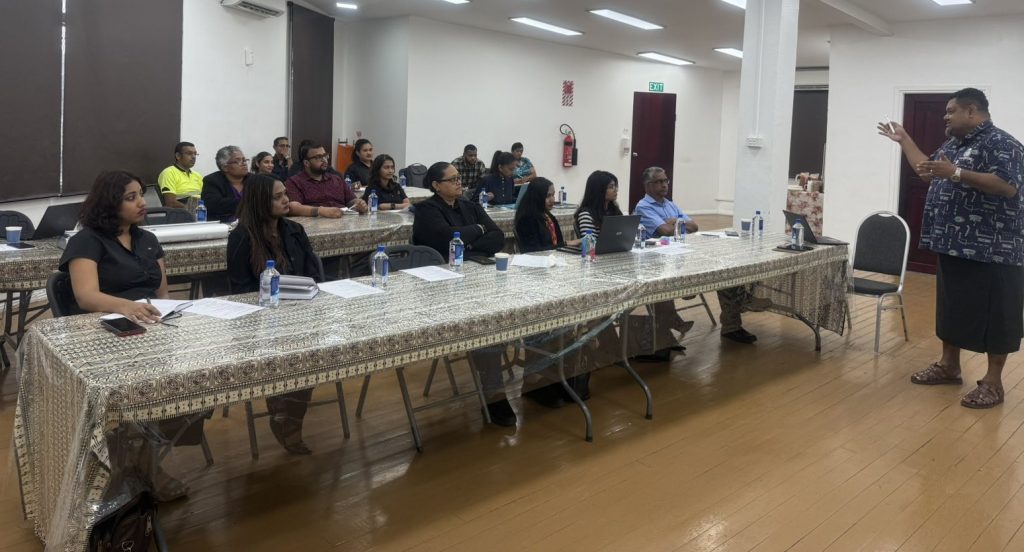
The Fiji Commerce & Employers Federation (FCEF) is undertaking a nation-wide consultation with its members with the objective to develop a strategy that will guide the federations efforts on labour law reform in Fiji.
“Labour relations, including rights, skills, productivity, cost of doing business and other related issues are priorities for our members and it is very important to ensure that we hear from them and develop an inclusive and proactive strategy,” said Mr Edward Bernard, the CEO of FCEF.
FCEF is the most representative and recognised Employer and Business Membership Organization (EBMO) in Fiji and therefore nominates representatives to the Employment Relations Advisory Board (ERAB), the 10 Industry Wages Councils and the National OHS Advisory Board (NOHSAB). Therefore, it is imperative that our representatives are mandated by and represent the aspirations of our members and the private sector and that there is synergy across all our boards and councils, added Mr Bernard.
The strategy will not only address the process and substance of FCEF’s engagement in current and new labour legislations but also ensure that they align to Fiji’s established national development and sustainable development goals.
“For instance, Government through the Fiji’s National Development Plan (2025-29) aims to increase annual economic growth rate to 4-5%, investment to 20% of GDP, MSME contribution to 21% of GDP and unemployment down to 3.8%. Ultimately, the strategy will support FCEF and the private sectors contribution towards achieving these national goals,” emphasized Mr. Bernard.
Through the strategy, FCEF aims to be proactive and effectively engaging in the labour law reform process, where the outcomes will enhance business productivity and sustainability, protect the rights of workers and drive Fiji’s economic growth.
Consultations in Suva and Nasinu have been completed and the FCEF team will be visiting the Western and Northern Divisions in the next few days.
FCEF is grateful for the funding and technical assistance provided by the International Labour Organization (ILO) for the development and implementation of this strategy.
Eldon Eastgate is the General Manager for the Pacific Islands at Essity, a global leader in hygiene and health. A former hospitality entrepreneur with roles in Fiji, and USA, he holds a Bachelor of Science in Hospitality Management from Ohio State University. With over 20 years of experience in manufacturing, primarily in personal hygiene. Eldon is passionate about building safer, healthier communities through access to quality hygiene solutions. He has served in various leadership roles across industry and community organisations, including the Fiji Commerce and Employers Federation, Red Cross, and The Learning Centre, reflecting his commitment to service and sustainability.
This will close in 0 seconds
Dr. Zelinda Sherlock, is the Deputy Lord Mayor of Hobart and CEO of Sherlock & Dutta Consulting. A graduate of the University of Tasmania and Deakin University (MA, PhD). Born in Suva, Fiji, and raised in Tasmania, she is the first woman of non-European heritage to serve as Deputy Lord Mayor and Councillor in Hobart’s 170-year history. A 2020 Tasmania Winner of the Excellence in Women’s Leadership Award, she has over 25 years’ experience in education, leadership, and community development across Australia and Japan. Dr. Sherlock is a passionate advocate for equity, collaboration, and inclusive community transformation.
This will close in 0 seconds
Lisa has over 30 years experience delivering tax, accounting, and advisory services across Fiji. She specialises in Fiji taxation, payroll, corporate finance, human resources, customs, and immigration. Providing strategic and administrative support to clients across sectors including mining, telecommunications, tourism, construction, and finance. Lisa has contributed to major projects in regulatory reform, financing, privatisation, and mergers and acquisitions. A Past President of the Fiji Institute of Accountants and the Fiji Australia Business Council, she remains active in policy dialogue between business and government. Lisa is a Fellow of CAANZ and FINSIA and a Life Member of the Fiji New Zealand Business Council.
This will close in 0 seconds
Naomi Mathenge is the Senior Country Economist for Fiji and Tuvalu in the Economic Policy Global Practice at the World Bank. She was previously a Senior Country Economist for Kenya before coming to Fiji. Her work focuses on macroeconomics and fiscal policy analysis and leads the work on economic monitoring, which provides an overview of recent developments and the outlook of major macroeconomic variables. She also co-leads work on the development policy financing that provides rapidly disbursing financing to the government for budget support. Prior to joining the Bank, she was the Deputy Director of Research and knowledge Management at the Commission on Revenue Allocation in Kenya and a Policy Analyst at the Kenya Institute for Public Policy Research and Analysis. Naomi holds a PhD in Economics from the University of Cape Town in South Africa.
This will close in 0 seconds
Jenny Seeto is one of Fiji’s most accomplished business leaders and a former Senior Partner at PricewaterhouseCoopers Fiji. Currently a Trustee of the Fiji Commerce and Employers Federation (FCEF), she has received several national honours, including the Officer of the Order of Fiji (2018) and the 50th Independence Commemorative Medal (2020). With extensive experience in advisory, assurance, taxation, and business consulting, Jenny has served on numerous national boards and taskforces driving reform and good governance. She holds a BA in Accounting and Economics (USP), is a Fellow of the Fiji Human Resources Institute, an accredited Mediator, and a former President of the Fiji Institute of Accountants.
This will close in 0 seconds
Ratu Rakuita Vakalalabure has served as Executive Chairman of the Fiji Pine Group of Companies since 2023. A legal and governance professional, he holds an LLM from the University of London, a Postgraduate Diploma in Commerce and Corporate Law, a Diploma in Legal Practice from UNFEI Tokyo, and an LLB from the Australian National University. He is admitted to the Bar and is a member of the Australian Institute of Company Directors. His career spans public service, legal practice, business advisory, and military service. At PGC, he is leading restructuring to strengthen profitability, sustainability, replanting programs, certification, and operational excellence.
This will close in 0 seconds
Sandeep Chauhan has been a dedicated member of the Fiji Commerce & Employers Federation (FCEF) for over 15 years, beginning with the Manufacturing & Trade Council and later serving as Chair. He progressed to the FCEF Board, holding roles as Vice President and President, leading reforms that strengthened the Federation’s relevance, efficiency, and member value. Known for inclusive and transparent leadership, he fosters collaboration between the private sector and government, champions SME growth, innovation, and sustainable policies. As Board Director, Mr Chauhan’s vision is to consolidate past achievements, modernise the Secretariat, and ensure FCEF remains a trusted, unifying voice for Fiji’s business community.
This will close in 0 seconds
Vanessa leads Fiji's most successful indigenous family-owned retailer, The Hot Bread Kitchen and its parent company, Samisoni Enterprises. Her career in marketing and management includes working for Nike across Asia, Oceania and Africa, with England's independent education sector and on voluntary advisory boards in the UK for human rights and veterans' welfare. She has an MBA from the University of Hong Kong and a BA from the University of Queensland. She enjoys working with her 650 staff and is grateful for their dedication, which fuels her belief that Fiji has the potential to become a developed economy within her lifetime. She is the proud mother of four legends and wife to her very own hero.
This will close in 0 seconds
Viliame Lega founded Twilite Investment Limited in 2000, overseeing diverse investments in manufacturing and chemicals, including Pacific Manufacturers Limited (Hibiscus Safety Matches), Pacific Coatings Limited (Dulux Fiji), and Central Pacific Chemicals Limited. Partnered with New Zealand’s Chemtrex to distribute ECOFUME, a global non-toxic fumigation product. With over 40 years of leadership across industries such as Fiji Sugar Corporation, ICI Chemicals, Colgate Palmolive, and Fiji Development Bank. He has held senior roles in Fiji and overseas. He is currently Chairman of Yatu Lau Company Limited, Executive Chairman of Twilite Investment, Director of Fijian Holdings Limited, and Trustee of FCEF and FGC.
This will close in 0 seconds
Dilip Khatri - Respected business leader with decades of experience shaping Fiji’s retail and business landscape. As Managing Director of Jack’s of Fiji, he transformed the company from a single handicraft store in Nadi into a diversified business with operations spanning Fiji, Papua New Guinea, and Timor-Leste, and expansion into restaurants, garment manufacturing, construction and farming. His focus on operational excellence and people development helped cement the company’s position as one of the Pacific’s most successful retail groups. Beyond Jack’s, Dilip also served as Chairman of Vision Investment Limited Fiji, where his strategic leadership and governance oversight contributed to the company’s continued growth and operational strength.
This will close in 0 seconds
Petaia Tuimanu was appointed the Chief Manager of Financial Markets at the Reserve Bank of Fiji, in January 2023. He previously served as Chief Manager Economics (2018–2022) and joined the Bank in 2001. From 2015 to 2017, he was seconded to the IMF in Washington, D.C. as an Advisor in the Southeast Asia Group. He holds a Master of Public Administration in Economic Policy Management from Columbia University, a Master of Economics from University Putra Malaysia, and a BA in Economics and Banking & Finance from USP. His expertise spans monetary policy, financial sector development, and macroeconomic management.
This will close in 0 seconds
Justin has nearly 30 years’ experience in financial markets, joining Westpac’s Economics team in 1999 after training at the Reserve Bank of Australia. He advises Westpac management, staff, and clients, and has worked in London as Chief Economist at St. George Bank. Justin manages the Bank’s commodities and inflation forecasting and focuses on the resources and energy sectors, decarbonisation, and Asia-Pacific developments. A regular visitor to Fiji for over 15 years, he values the insights of Westpac’s local team and clients and remains inspired by Fiji’s warmth, striving to be a positive voice for change.
This will close in 0 seconds
Mark Halabe is the Executive Chairman of Mark One Apparel, a leading garment manufacturing and export company based in Suva.
He pursued a Bachelor of Science in Textiles and a Masters of Industrial Engineering. His technical expertise and entrepreneurial drive have enabled Mark One Apparel to thrive in competitive international markets. Since graduating from the Australian Institute of Company Directors, Halabe has served on several boards, including: Investment Fiji, Fiji Airports, Kontiki Finance, Kinetic Growth Fund and the International School, Suva. Halabe is also a regular speaker at business forums, sharing insights on digital transformation, global logistics, and the evolving landscape of apparel manufacturing.
This will close in 0 seconds
Peter previously served as Deputy Head of Mission and Minister at the Australian Embassy in Tokyo and as Australia’s Ambassador to Timor-Leste (2018–22), overseeing the maritime boundary agreement and leading Australia’s COVID response partnership. He has been a lead negotiator on trade agreements with China, Japan, and Korea, and worked on security cooperation with Japan and Pacific climate resilience. Peter also served as a Senior Civilian Monitor in the Bougainville Peace Monitoring Group and began his career in Samoa. He received the Order of Australia Medal for his 2011 Japan earthquake response and the Collar of the Order of Timor-Leste.
This will close in 0 seconds
An ambitious, strategic, and results-driven leader, Saiyad is passionate about teamwork and continuous improvement. Originally from Nasinu, he studied at Suva Muslim College, FNU, and USP, earning diplomas and degrees in Accounting and HR, along with an MBA from USP. Starting as an Accounts Officer at Parshotam Lawyers in 2001, his career has spanned roles with Maxumise, Tourism Fiji, and Ranjit Garments, leading to his current position as CEO of PAFCO, one of the largest tuna producers in the South Pacific. A lifelong learner and dedicated Arsenal fan, he enjoys playing football and watching movies with his children.
This will close in 0 seconds
Mr. Sarvesh Devan is the Country Manager for DHL Express Fiji & Pacific Islands, overseeing operations across 11 countries. He joined DHL in 2001 as Financial Controller and advanced through roles including Business Services Manager and Senior Manager Commercial before becoming Country Manager. Under his leadership, DHL Fiji has achieved Great Place to Work certification for five consecutive years, launched a modern gateway in Nadi, and expanded its eCommerce portfolio. With prior experience at Fiji Gas, the Ministry of Finance, and Carpenters Shipping, Sarvesh brings over 24 years of expertise. Originally from the Friendly North, he enjoys golf and soccer.
This will close in 0 seconds
Ms Darlow has a background in multilateral diplomacy, specialising in environmental, international security, and human rights issues. She has worked in the major multilateral centres of New York, Geneva, Suva, Vienna and Nairobi. Ms Darlow has also served as New Zealand’s Acting Permanent Representative to the United Nations in Geneva, and as a member of the senior leadership team governing the New Zealand Aid Programme. She has been posted in Fiji as High Commissioner since December 2021.
This will close in 0 seconds
Leslie Lee Fook is a leading data transformation strategist and educator in the Caribbean, with over 20 years’ experience in Analytics, Robotic Process Automation, and Artificial Intelligence. Serving enterprise and government clients, he is dedicated to building a globally competitive region and improving lives through data. Passionate about data literacy and open data, Leslie envisions a future where all Caribbean citizens are “data citizens.” He aims to cultivate the Caribbean Analytics community, harnessing local creativity and talent to position the region as a global hub for analytics expertise—transforming it into the “India for Analytics.”
This will close in 0 seconds
Vinay Narsey is an accomplished executive with extensive experience in manufacturing, trade, and business leadership across Fiji and the Pacific. As Managing Director of Narseys Plastics Industries Pte Ltd, he drives strategic growth and innovation in packaging solutions for domestic and export markets. Holding a Bachelor of Commerce from Monash University, he is an Affiliate of the Australian Institute of Management and a member of the Australian Institute of Company Directors. As Immediate Past President of the Fiji Commerce and Employers Federation and Chair of TSAC, he champions sustainable industry growth, trade facilitation, and inclusive economic development for a resilient Fijian economy.
This will close in 0 seconds
Paul Mackay is Manager Employment Relations Policy at Business New Zealand, New Zealand’s largest employer advocacy body. He has over 30 years high-level experience in the fields of industrial relations, employment law, labour market policy, strategic planning, change management and human resources in central government, state owned enterprise and the private sector. Since joining BusinessNZ in 2006, Paul has represented New Zealand employers internationally, on many occasions at the International Labour Organisation (ILO), as well as acting as spokesperson for the International Organisation of Employers (IOE) on employment related topics. In 2021, he was elected as a member of the Governing Body of the International Labour Organisation based in Geneva. Also, in 2021 he was awarded life membership of the Employer and Manufacturers Association.
This will close in 0 seconds
Alexis Bernardino is an internationally recognized cybersecurity and telco infrastructure expert with over 20 years of experience. He currently serves as Field CISO and Head of Enterprise Consulting Practices at PLDT Enterprise. Alexis has held executive roles at companies including Fujitsu, Cisco, NEC, and Converge ICT, transforming security protocols and integrating emerging technologies. He was the first Filipino Board Director and Vice President of FTTH Council Asia Pacific and represents PLDT Enterprise on the Philippine Government’s Private Sector.
This will close in 0 seconds
Ms Latileta Qoro (Lati) is passionate about governance, sustainability and inclusion. She began her career with PricewaterhouseCoopers (Suva) prior to joining the Reserve Bank of Fiji's Financial System Development Group working in the areas of governance and improving access to finance for businesses through Fiji's capital markets. After the Reserve Bank, she took up a leadership role at the South Pacific Stock Exchange, followed by consultancy and is now part of the Vinod Patel Group as General Manager - Environment, Social & Governance. Lati holds a Master of Commerce Degree majoring in Accounting, and also a Bachelor of Economics Degree both from the University of Sydney and currently serves on a number of boards in Fiji.
This will close in 0 seconds
Jone Maritino Nemani is the Permanent Secretary for Employment, Productivity and Workplace Relations for the Government of Fiji, overseeing the Ministry’s operations and labour mobility programs under the PALM and RSE schemes. With over four decades of leadership in government, industry, and international development, he serves on the ILO Committee of Experts, chairs the Asia Productivity Organisation Board, and holds key roles with Japan’s GP 2.0 Council and the Indo-Pacific Economic Framework. A former Permanent Secretary for Youth and Sports and USP Executive Director, he holds degrees from USP, UNSW, and Turin, and once captained Fiji’s national football team.
This will close in 0 seconds
Hon. Rear Admiral (Ret’d) Viliame Naupoto began his career with the Republic of Fiji Military Forces in 1982, serving in the Navy. He later held senior civil service roles, including Director of Immigration, Permanent Secretary for Fisheries and Forests, and Minister for Youth and Sports (2012–2014). Returning to the RFMF in 2015, he became Commander in 2016, serving until his retirement in 2021. Elected to Parliament in 2022, he chaired the Standing Committee on Foreign Affairs and Defense before his appointment as Minister for Immigration in 2025. He hails from Vatoa, Lau, and is married to Lilian, with four children and eight grandchildren.
This will close in 0 seconds
Rowena Taito is a seasoned senior executive with over 16 years of experience across communications and public relations, marketing, sales, corporate affairs, strategy, change management, and sustainability. She holds a Bachelor of Business Management and has worked across diverse sectors in FMCG, Banking and now in Aviation with Fiji Airways. She serves on the Board of the Fiji Commerce and Employers Federation (FCEF) as Vice President West and TOPEX Chair for 2025 and has served on the boards of Rotary Club of Suva East board, Fiji Outrigger, and the Suva Marathon Club. Rowena is committed to advancing initiatives to support gender equality and promoting health and wellbeing in and out of the workplace while supporting FCEF’s on-going mission to represent and strengthen the private sector.
This will close in 0 seconds
Keiko Nagai is an experienced Epidemiologist and international development specialist focused on global health cooperation. With a Master of Medical Science degree researching Official Development Assistance (ODA) and lifestyle diseases, she has led numerous public health initiatives worldwide. Her work emphasizes non-communicable disease (NCD) prevention and health promotion across Fiji, Tonga, ASEAN countries, Africa, and Central Asia. Since 2004, she has supported Fiji’s health system through data tools and management manuals. Since 2022, she has led the NCD2 Project with the Ministry of Health, enhancing NCD screening efficiency and promoting healthy lifestyles using Motivational Interviewing (MI) techniques.
This will close in 0 seconds
Dr. Rigamoto Seforsa Taito is a seasoned healthcare executive with over 30 years of experience in paediatrics, spanning both the public and private sectors. As General Manager of Health Care Fiji (HCF)/Aspen Medical, she leads clinical teams dedicated to quality care, safety, and improved health outcomes. She holds an MBBS and Master of Medicine in Paediatrics from the University of the South Pacific, a Postgraduate Diploma in Child Health from the University of Otago, an MBA from USP, and a Basic Certificate in Quality and Safety from the Institute of Health Improvement. Her leadership reflects a deep commitment to clinical excellence.
This will close in 0 seconds
Anna Morris is a transformative HR leader and certified Neuro-Semantics Trainer with over 16 years of senior leadership experience at Fiji Water and Fiji Airways. As Chief People Officer at Fiji Airways, she drives strategic initiatives that empower people to thrive through growth, resilience, and purpose. A proud Rotuman and founder of Pacific Potential, Anna created the Powerful Pacific Woman Programme to advance women’s leadership and mindset transformation. As an Associate Meta Coach, she integrates neuroscience-based coaching into her work, unlocking human potential and driving sustainable cultural change across organisations in Fiji and the Pacific.
This will close in 0 seconds
Eroni Sotutu is the Athletic Performance Coach for the Fijian Drua Super Rugby Team. With over seven years’ experience working with Olympic, international, and professional rugby athletes, he combines practical coaching with data-driven insights to optimise player development and readiness. His role includes analysing training and match data using performance technologies and translating findings into actionable feedback. Before joining the Drua, he held strength and conditioning roles with Fiji Rugby Union’s 7s and 15s programs. Eroni holds degrees from the University of Otago and is completing a Master of High Performance Sport at Australian Catholic University.
This will close in 0 seconds
Jon joined Munro Leys in 2000 after a distinguished career in Fiji’s Government legal service. He served as Permanent (Industrial) Arbitrator, on the Sugar Industry Tribunal, and as one of two legal counsel to the Fiji Constitution Review Commission (1995–1996). He was Chief Electoral Officer for the 1992 and 1994 Parliamentary elections. Jon has extensive experience as a solicitor, litigator, and legislative drafter, advising on constitutional, commercial, corporate, securities, intellectual property, employment, and human rights law. At Munro Leys, he focuses on constitutional, employment, administrative, commercial, and IP law, and occasionally presents on public law issues in Fiji.
This will close in 0 seconds
Still to come.
This will close in 0 seconds


